
.png)
A catch up of some of the best examples of IP licensing in video games and the latest news on collaborations, brand partnerships, in-game events and the industry as a whole.
This month has been a busy one, even if many have been taking a well-deserved summer break.
For many, that break came to an end with Gamescom in Cologne at the end of the month where the business show seemed to get bigger and bigger.
We weren’t in direct attendance this year but took the opportunity to network through sponsoring the first birthday of the “Not at Gamescom” event in London where we met many new connections. Thanks to Lakhvir and his small team for welcoming us and we hope to do more events together. Not at Pocketgamer in January anyone?
IP Spotlight this month focuses on some IPs on marketplace that have recently been viewed by developers to support ideation and search conversations. We’re continuing to see an uptick in marketplace engagement and how that aligns with wider market objectives.
There’s some exciting new IP additions in the pipeline also. Two of which we are very excited about. You will want to come back to investigate those if you have not been around for a while. We will announce them, do not worry….
Developer Diaries takes you through a couple of ongoing projects we continue to assist with.
Finally, we share some of the usual industry news stories, update snippets from the world of gaming collaborations and more.
For further information on Layer, what we are doing now and more, please reach out to Simon@layerlicensing.com

Gamescom is becoming a marketplace for IP expansion, not just game launches.
The most interesting commercial signal is the continued convergence of gaming IP with other consumer categories. Gamescom had record scale this year, with all available exhibition space booked and more than 1,600 exhibitors, making it increasingly valuable as a B2B marketplace for publishers, platforms, brands and licensees.
We could go in to examples of all the usual suspects but we thought we would pick up on something different to start this month.
So, a particularly good example of where everything is slowly going was IKEA / Xbox.
The two companies launched YXSTABY, a nine piece gaming-inspired furniture and accessories collection. Yes, OK this is not the normal kind of IP integration we may cover but we have been struck by it.
Importantly, this isn't simply Xbox branded merchandise….
IKEA and Xbox designers worked together on the products, translating gaming design language, including a thumbstick inspired stool and Dpad cushion, into mainstream home furnishings. The collection launches in October.
Why it matters for licensing as a whole:
This is a shift from logo licensing towards co-created product/IP extensions.
Gaming IP becomes a design input and cultural asset that can generate revenue in adjacent categories such as furniture, fashion, food, entertainment and consumer technology.
Yes, we sometimes touch on product categories other than games and gaming directly, and why not when such cool initiatives are progressing.
Another important Gamescom theme was that brand partnerships of many types and styles are increasingly being built inside the gaming experience and development pipeline, rather than being bolt-on marketing campaigns. Bolt on campaigns do of course still work and will continue to do so but it is always good to watch shifting trends.
Even though, not technically a licensing deal but a brand placement deal, it is however interesting to see the depth of some brand integrations these days and it is certainly worth highlighting one which was evident at the event.
The clearest example was Samsung x Activision/Call of Duty: Modern Warfare 4 where Samsung became the official TV, monitor, soundbar and Wi-Fi speaker partner. Yes, ok, once again this may not be our normal newsletter content as such, but it paints another part of the evolving landscape.
The relationship does however go a little deeper whereby Samsung worked with Activision during development around HDR10+ GAMING, with the technology intended to reproduce the game's colour, contrast and visual intent on compatible displays.
Samsung says it plans to extend HDR10+ GAMING to more than 20 AAA titles by the first half of 2027. Something to keep an eye on.
There is a similar model around Samsung Odyssey 3D, where Samsung is working directly with studios to optimise titles including Cyberpunk 2077 and Cronos: The New Dawn for glasses free 3D. The power of the video games industry as a whole continues in a limitless way it seems with more cool crossovers.
Anyway, this is potentially significant for IP licensing because the value proposition changes from:
“Put our brand into your game.”
to:
“Let's build something into the creative/technical experience that makes both IPs more valuable.”
That is potentially a much more defensible and higher value partnership model. Indeed it is. Watch it…
Our most detailed story this month leads on from the above but more in our current wheelhouse where crossovers, remasters and new formats are clearly extending the life of established properties.
The content announcements at Gamescom themselves reinforce a notable marketplace trend…
Publishers are increasingly monetising established IP across multiple formats, generations and audiences, rather than relying solely on new standalone franchises.
Certainly necessary with the barriers to entry for new franchises to flourish in the current market.
Gamescom's Opening Night Live included major extensions such as The Witcher 3: Songs of the Past, positioned as a narrative bridge towards The Witcher 4, the Final Fantasy VII trilogy finale, Gears of War: E-Day, Game of Thrones: War for Westeros, and the Heroes of Might & Magic III remake.
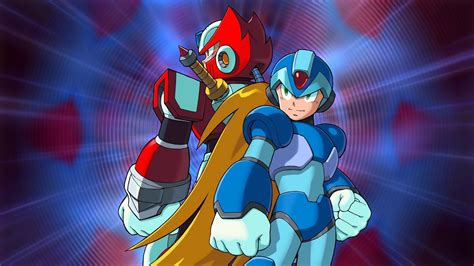
There are also smaller but telling examples of cross-IP creative integration. Mega Man: Dual Overdrive was announced alongside a Mega Man crossover skin for Capcom's Pragmata - a relatively simple integration, but exactly the sort of cross-pollination that lets publishers move audiences between properties.
And outside the headline IPs, the business ecosystem is broadening.
Xsolla used Gamescom to announce an expanded commerce strategy, including its Xsolla Agency concept around access to IP (hello Xsolla and welcome to the party), monetisation and operational infrastructure, alongside a backend partnership with AccelByte.
Ultimately Gamescom continues to demonstrate across the board that Gaming IP is moving from being something that gets licensed to something that gets built not just in to a game but becoming experiences and overall deeper creative partnerships.
The three models we would urge you to continue to watch are:
Naturally of all the three elements above, it is the third that is where we fit in here at Layer and we continue to enjoy the progressive discussions we are having with developers and rights holders alike.
For rights holders, the above suggests the biggest opportunity isn't necessarily another traditional licence.
It is co-development with brands that can bring a new capability, audience or distribution channel to the IP.
Gamescom is increasingly functioning as the place where those relationships can be showcased commercially as well as creatively.
Once again, as we have highlighted before, we believe in a growing game to game licensing ecosystem.
The game-to-game story at Gamescom was less about “crossovers” in the traditional sense and more about publishers using one game’s IP to inject value, relevance and monetisation into another game. There were a couple of particularly good examples this year. Expanding on what we have already highlighted lets go a little deeper in to a couple of those….
IP × IP: the game-to-game opportunity…
The most interesting development at Gamescom 2026 was the increase in the emergence of game-to-game licensing as a commercial strategy in its own right. Rather than licensing a game character into a film, toy or apparel, publishers are putting one gaming franchise directly inside another gaming ecosystem.
That matters because the two IP owners can potentially exchange audiences without asking either audience to leave said gaming ecosystem.
1. The Witcher × Diablo — probably the strongest example
The standout example and one covered in our Collab Tracker is the new CD PROJEKT RED X Blizzard collaboration between The Witcher 3 and Diablo IV. Announced around Gamescom, the partnership brings The Witcher into the Diablo ecosystem, including Geralt-themed content, while The Witcher 3: Wild Hunt is also coming to Blizzard's Battle.net platform.
This is commercially interesting for several reasons and apologies if you know all of this already, but we will break it down a little for you.
First, the IPs are highly compatible creatively. Both are dark fantasy worlds built around monsters, combat, loot and mature storytelling. So the crossover doesn't feel arbitrary: Geralt entering Sanctuary is culturally and thematically credible.
Second, it creates a two way marketing effect. CDPR gets exposure to Diablo's enormous live-service audience at exactly the moment it is bringing The Witcher 3 back into the market through its remaster. Blizzard, meanwhile, gets fresh Witcher-related engagement for Diablo IV. Seems a fair balance for both here.
However it also illustrates an important evolution in licensing:
The licence is no longer just the character. The licence is the audience.
Geralt isn't simply being used as a cosmetic. His presence gives Blizzard a reason to communicate with Witcher fans, while the Battle.net distribution relationship gives CDPR access to Blizzard's ecosystem.
The fact that the full crossover details are being held for later also suggests this is being treated as a broader partnership rather than a one-off skin drop.
2. Mega Man × Pragmata — a smaller but very interesting model
Capcom provides a different example with Mega Man: Dual Override × Pragmata.
At Gamescom, Capcom announced that Pragmata will receive DLC featuring Mega Man and Roll-inspired character skins, following the new Mega Man: Dual Override reveal.
On the surface this is much smaller than Witcher × Diablo, but strategically it is fascinating because both properties belong to the same IP owner!
This means Capcom doesn't need to negotiate an external licence. Instead, it can use its portfolio almost like an internal licensing marketplace:
Mega Man - Pragmata - Mega Man audience - renewed interest in Pragmata…..
The benefit is particularly strong for a newer IP. Pragmata doesn't have decades of accumulated consumer awareness, whereas Mega Man does. Bringing Mega Man into Pragmata effectively transfers some of that cultural equity to the newer title.
And it works in reverse: Mega Man: Dual Override gets additional visibility through another Capcom game.
That points to an interesting future model for publishers with large portfolios: cross IP activity can become a portfolio management tool, not simply fan service.
3. The bigger opportunity: games becoming distribution channels for other games
We'd actually go one step further in the business analysis.
The valuable asset isn't necessarily the individual crossover item. It's the installed audience and engagement infrastructure of the host game. Something that everyone wants… Greater audience access and engagement.
A live-service or highly engaged game can effectively become a media channel for another IP.
For example:
That last model is particularly powerful because it turns ownership of one game into an incentive to purchase another.
And we're already seeing the ecosystem move in this direction beyond Gamescom. Epic has been developing a model where purchasing third party games can unlock Fortnite cosmetics based on those games, with publishers including Capcom and miHoYo participating in that.
That is a much more interesting commercial proposition than conventional cross-promotion because the transaction itself becomes part of the IP integration.
4. Why this matters for licensing
From a licensing perspective, we would break game-to-game partnerships into three increasingly valuable tiers:
Tier 1 - Cosmetic crossover
Character/skin to host game
Example: Mega Man/Roll content appearing in Pragmata.
Easy to execute, relatively low risk and good for fan engagement, but limited economic depth.
Tier 2 - Content crossover
Character + gameplay/content to host game
This is where the IP starts influencing the actual game experience — characters, quests, enemies, weapons, environments, events, etc. This has much greater potential because the licensed IP becomes part of the player's experience, not just the visual layer.
Tier 3 — Ecosystem partnership
IP + distribution + commerce + content
The Witcher/Diablo relationship is moving in this direction because it combines the crossover with The Witcher 3 entering Battle.net and a broader relationship between CDPR and Blizzard.
This is the most interesting model commercially because multiple assets are being exchanged:
IP ↔ audience ↔ distribution ↔ engagement ↔ commerce
That's much closer to a strategic partnership than traditional licensing.
Naturally a better solution but not all studios and IPs can do this so there will always be variables up and down the food chain as such, but they all form good benchmarks for what is possible.
The strategic takeaway
So, if we were to conclude on what this means from what occurred in and around Gamescom, we could come to the conclusion, which is not an unsurprising one, that game to game licensing is becoming a new customer acquisition and engagement channel.
The key shift is that publishers are beginning to recognise that their game audiences themselves are licensable assets.
A successful franchise can lend its characters, world and cultural relevance to another game, while the host game provides access to a large, engaged audience. The result can be incremental content revenue, player retention, cross-selling and customer acquisition for both sides.
And there is a particularly interesting distinction between internal portfolio crossovers such as Mega Man x Pragmata and external IP partnerships such as The Witcher x Diablo.
The former lets publishers move equity around their own portfolio. The latter lets two publishers trade audiences and cultural relevance.
We therefore suggest watching this evolving space closely because the next logical step isn't just skins. It is co-developed quests, characters, weapons, live events, progression rewards and even mechanics that combine two gaming IPs. At that point, IP licensing becomes embedded in the game design itself rather than sitting on top of it
IP Spotlight:
We’ve already highlighted in recent months how the Layer marketplace ecosystem has amazing opportunities for developers across multiple genres of IP. You can use them for ideation and make enquiries as you see fit.
Here’s a few individual IPs you may find interesting which have seen engagement upticks in recent times.
VOLTRON
Amazon movie is released in early 2027. Keep an eye out for trailers and more as we head to the end of the year. We have all the classic elements you need to make great games and integrations.
THUNDERBIRDS
A new release by one of our regular partners, Savy Soda, sees Thunderbirds come alive once again in Pixel Starships. One of many new IPs soon coming to the marketplace in this genre.
TOTTENHAM HOTSPUR FC
It is the start of the domestic football season in the UK and we have a few interesting conversations in the works with Tottenham FC. One of multiple clubs available to license via the marketplace.
LIVERPOOL FC
New seasons create new possibilities. We are pleased to have a reinvigorated relationship with Liverpool FC and are keen to welcome new conversations.
Overall IP additions to the Layer marketplace have steadily increased recently with our initial strategic commitment to onboarding more IPs to complement existing strategies. There are some really great ones to come!
Layer continues to form part of both licensors and agents outreach strategies together with developers inbound IP acquisitions.
If you are an IP owner or agency seeking to open up new conversations through collaborating with the Layer marketplace and the support services offered by AT New Media, we welcome conversations as to how we can reach mutually beneficial markets.
Developer Diaries:
Wherever you are in your development lifecycle when it comes to licensing initiatives, we are pleased to have you with us and we’re here to help.
A brief bit of information on some of the developers we continue to and have engaged with both on and off the Layer Licensing Marketplace.
We’ve been busy offering licensing guidance and opportunity delivery whether that’s via Ideation, Search or Commercial support.
SAVY SODA:
We’ve been fortunate to support some developers with multiple license acquisitions for their mobile content integrations and Savy have shown the way for others.
CREO:
Tabletop Games from cards to board games and all variants thereof. It’s a pleasure to be supporting CREO with IP ideation and search across multiple genres.
ROCKETFUEL:
User generated content and other integrated character experiences.
VERSE:
Gamified learning products for all ages.
METAVERSEME:
Digital Avatar creation and accessories.
If you are a content developer seeking to start a journey with IP licensing or are a seasoned pro and are seeking additional support, we have the options available to help you both on and off marketplace.
From ideation and search to commercial proposal drafting and support, we’re here to help.
Release Notes – Layer Collaboration Updates:
As you read each month and herein, we collaborate with developers, licensors and agents in many ways.
Supporting ideation through to commercial deal delivery, we like to mention some of our own work from time to time.
We’ve seen multiple product launches of projects utilising IP sourced from the Layer marketplace.
We’re a complimentary tool and can assist you with your licensing objectives whether inbound or outbound.
We don’t promise the world but we do promise commitment to the cause and are proud of our diligence in supporting licensing projects come to successful conclusions.
Please follow our LinkedIn Page for updates on all of the above and more.
In Brief…
Here are some of our favourite recent and announced brand collaborations and licensing partnerships from the last month:
Remember to keep an eye on our Collab Tracker for regular updates on collaborations we love (including some of ours of course) from the whole games and gaming industry.
In other news…
Thanks again to everyone who is working with our agency AT New Media and the Layer marketplace.
We really appreciate you all.
If you have a story to tell or would even like to share some news for our monthly newsletter, please do get in touch.
We hope you have had a great summer (in the Northern Hemisphere) and are looking to a great summer (in the Southern Hemisphere).
