

A catch up of some of the best examples of IP licensing in video games and the latest news on collaborations, brand partnerships, in-game events and the industry as a whole.
How are you doing? Well, we’re progressing steadily, with many new inbound and outbound licensing discussions underway whilst delivering steady consultancy work within our agency structure via AT New Media.
We’re almost a year into our amalgamation within AT New Media, and we’ve achieved a lot with deal closure and market communication, establishing where the blend of on-marketplace and off-marketplace licensing services intersect.
We now need more developers and brands to come to the marketplace as we up the work in that respect over the coming 12 months. Want to get involved in that? Please get in touch.
IP Spotlight this month covers examples of some new IPs available via the Layer marketplace, and we’ve decided to highlight a few different ones this month.
Developer Diaries again highlights more examples of creative companies utilising the Layer and AT New Media on and off-marketplace licensing support services to try and evolve new opportunities for existing and future game projects.
Finally, we share some of the usual industry news stories, update snippets from the world of gaming collaborations and more.
For further information on Layer, what we are doing now and more, please reach out to Simon@layerlicensing.com
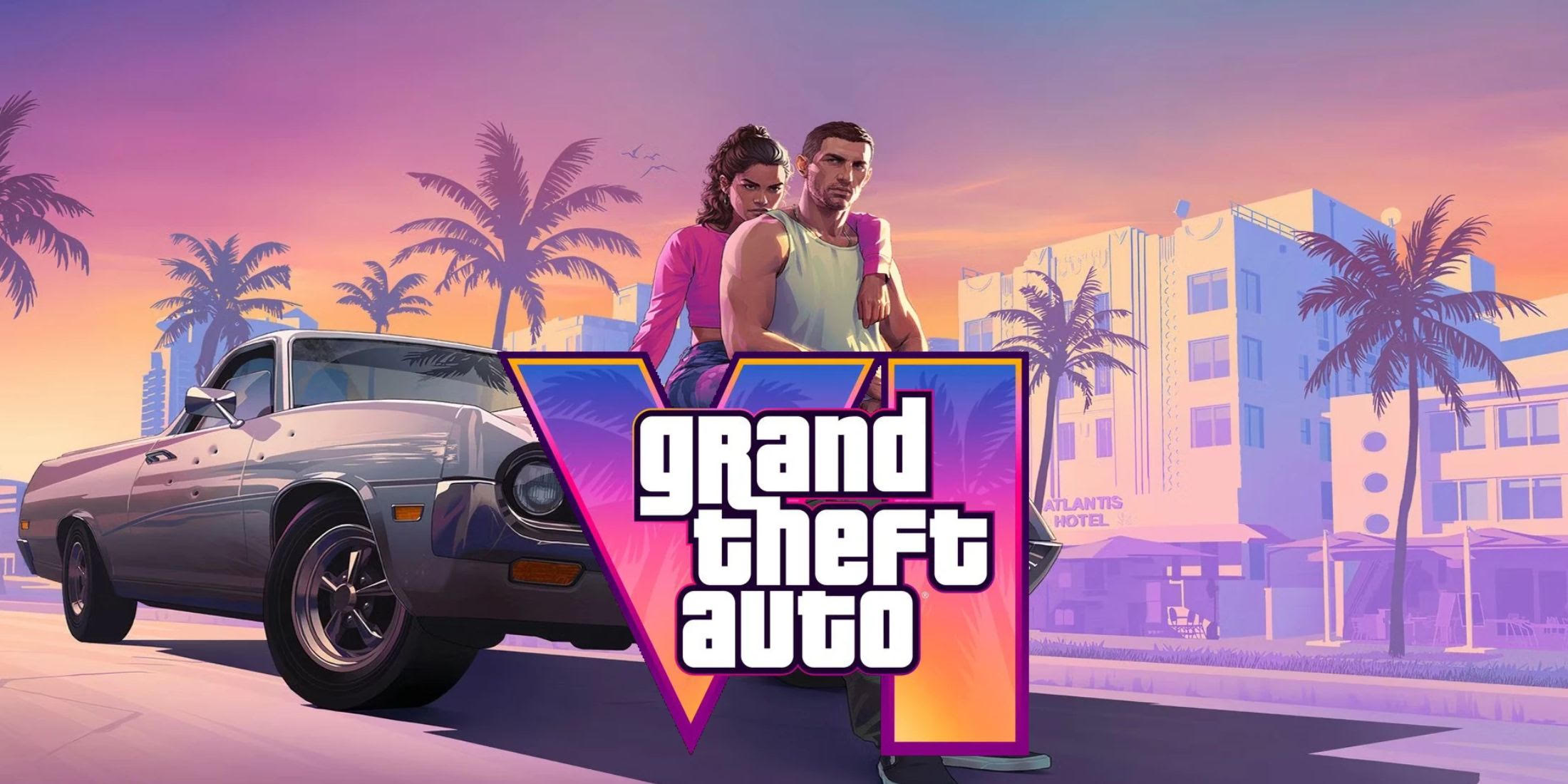
Everyone has been talking about it this month, so we thought we’d investigate whether there is any IP within...
In-game licensing and commercial partnerships..
Not surprisingly, music has been the biggest area of licensing and commercial collaboration within the GTA VI ecosystem.
What about real-world brand partnerships?
One particularly interesting commercial decision:
Overall commercial takeaway
GTA VI fundamentally demonstrates how a major gaming release can become a significant music licensing and entertainment partnership platform, without necessarily relying on conventional product placement or sponsorship deals. Something many other games can’t take the same stance with due to growing multi-source inbound revenue requirements.
In our second story this month we focus on how AI (artificial intelligence) generated games are reshaping the Steam marketplace and challenging established developers and publishers. Is this changing the commercial value of established gaming IP?
Artificial intelligence is beginning to change the economics of the video games industry. On Steam, the world's largest PC gaming marketplace, AI is opening the door for smaller developers and independent creators to produce games more quickly, cheaply and with fewer traditional development resources.
Sounds exciting right? Perhaps… or perhaps not….
There is a bigger question emerging: what happens when AI generated games begin competing directly with traditionally developed titles, including established franchises backed by valuable intellectual property (IP)? Believe us when we tell you that it’s already happening…
The implications go beyond development costs. They touch on discoverability, consumer expectations, pricing, intellectual property rights, music and voice licensing, and ultimately how games generate revenue.
Steam is experiencing an AI generated content boom…
The scale of adoption is increasing rapidly.
The technology is being used for considerably more than simply creating artwork. Common applications include:
Ultimately for smaller studios, this represents a significant reduction in the resources required to bring a game to market.
What previously required dedicated artists, writers, voice actors and specialist production teams can increasingly be supported by AI tools.
However, it is important to distinguish between games that use AI to assist development and games that are fundamentally built around AI-generated content.
We believe this should also be clear in their charts and it may already be time to separate ones as a matter of urgency.
Steam's disclosure policy focuses on content players actually consume, rather than simply using AI powered coding assistants behind the scenes.
Is AI actually taking sales away from traditional games?
For us absolutely yes!
However, this is arguably the most interesting commercial question, and the early evidence is more complicated than it first appears.
AI is undoubtedly increasing the number of games competing for consumers' attention.
However, more games do not automatically mean more successful games.
A 2026 analysis by former game designer Sulka Haro examined more than 53,000 Steam releases between July 2023 and July 2026.
The findings were particularly interesting:
These figures suggest that AI is making it easier to produce games, but not necessarily easier to sell them!
In fact, the data suggests that many AI assisted releases are actually struggling commercially.
Recent data points to inexperienced teams, small marketing budgets, lower production values, or a lack of differentiation as possible causes, though this isn't true in every case
An additional November 2026 analysis by Game Oracle found that games carrying an AI disclosure had a median estimated sales figure of around 71 copies, compared with 200 for games without an AI disclosure, among titles with at least one estimated sale.
The research also found lower review numbers and purchase interest indicators for AI disclosing games. Importantly, this is a correlation, not proof that AI use itself causes weaker sales.
This, as we say, remains an open debate as we don’t know whether consumer reactions are commercially short term or long term.
The important distinction:
There is currently stronger evidence that AI is increasing competition and market saturation than there is evidence that AI-generated games are directly taking significant sales away from established traditional franchises.
The threat to established gaming IP
This is where the longer term implications become particularly significant.
Established gaming franchises have traditionally enjoyed substantial competitive advantages:
AI may already be starting to challenge some of these advantages.
Smaller developers can potentially use generative AI to create games that look increasingly sophisticated, develop compelling narratives and produce large amounts of content at a fraction of traditional production costs.
This creates three potential challenges for established publishers.
A- Competition for consumer spending
Consumers have a finite amount of time and money to spend on games. If AI makes it possible to release thousands of additional titles, traditional publishers face an increasingly crowded marketplace.
Even if AI games do not directly outperform major releases, they could make it harder for smaller traditional games to find an audience. Hence our request for Valve to add stores for specific content, notably those with major non AI-functionality.
B- The value of established IP
Major franchises such as Grand Theft Auto, Call of Duty, The Elder Scrolls and Pokémon have something AI-generated competitors cannot easily replicate: legally controlled, recognisable intellectual property with an established audience.
However, AI could make it much cheaper for competitors to produce games that imitate the style, mechanics or general appeal of successful franchises.
This could create a growing problem around unofficial lookalikes, character imitation and unauthorised use of copyrighted material.
This can also impact the value of other IP led projects unless they’re acknowledged in a different way.
C- The possibility of AI-powered franchise experiences
There is also a potentially positive side for IP owners, should they be willing to fully engage with AI as such..
Imagine a future GTA experience where individual characters can hold genuinely dynamic conversations, remember previous interactions, and respond differently to each player's behaviour.
Or a role playing game where every character has an AI-generated personality, creating virtually unlimited dialogue and story possibilities.
For established publishers, AI could become a way of extending the lifespan and commercial value of existing IP rather than simply competing against it.
D- The licensing and copyright battle
One of the biggest issues facing the industry is who owns the content created using AI.
Traditional games rely on extensive licensing arrangements covering:
AI introduces a new complication: developers may be able to create content that closely resembles existing characters, voices or creative styles without having a formal licence.
For IP owners, this creates several risks:
Valve's rules make clear that AI disclosure does not give developers permission to infringe someone else's intellectual property.
Games must still comply with copyright and other content requirements.
There is also an opportunity here for major rights holders.
Rather than simply fighting AI, publishers could develop licensed AI tools and environments that allow third-party developers to create experiences using officially approved characters, worlds and assets.
This could eventually create a new licensing revenue stream for major entertainment companies.
E: Traditional publishers are not standing still
It would be a mistake to assume that AI is exclusively a threat to established developers.
Major studios are also adopting the technology to reduce production costs and improve development efficiency.
BCG estimates that around half of game studios are now using AI in some capacity. It also identifies AI as a potential way to accelerate production, improve quality assurance and reduce development costs.
The likely winners may therefore be established publishers that successfully combine:
In other words, AI may actually strengthen the competitive advantage of established publishers if they can use it to produce better games more efficiently.
F: What happens next?
There are several developments worth watching over the next two to three years.

One particularly interesting area is the potential for AI-powered downloadable content.
Instead of purchasing a traditional expansion pack, players could eventually pay for access to evolving AI-driven experiences, characters and storylines within established franchises.
This could create new recurring revenue opportunities for publishers, although the costs of running live AI services would need to be carefully managed.
Conclusion: An opportunity as much as a threat
The arrival of AI-generated games on Steam is not yet evidence that traditional games are losing substantial sales to AI competitors. The available data actually suggests that most AI disclosing releases are commercially underperforming.
However, the technology is dramatically lowering the barriers to game development and increasing the number of titles competing for consumer attention.
The longer term threat to established publishers may not be that AI-generated games replace blockbuster franchises. It may be that AI fundamentally changes the economics of creating, distributing and monetising games.
For owners of valuable gaming IP, and IP moving into the space in general, there is a significant opportunity to turn AI into a new licensing business. Officially licensed AI-generated characters, interactive storytelling, and user-created experiences could become valuable extensions of existing franchises.
Ultimately, AI may not replace the value of great gaming IP. It could make that IP even more valuable provided its owners retain control over how it is used, licensed and commercialised
For our final story this month we once again touch on cross IP collabs of which we cover many in our collab tracker.
The traditional approach to content licensing is changing. Historically, licensing was largely about securing the rights to use recognisable music, characters, brands or entertainment properties within a game. Today, it is becoming a much more strategic exercise, with publishers and rights holders looking beyond simple content placement towards collaborations that create shared audiences, cultural relevance and new commercial opportunities.
The gaming industry is particularly well positioned to benefit from this evolution. As games increasingly become entertainment platforms in their own right, the opportunity to integrate music, film, television, sport, fashion and consumer brands is growing.
We are already seeing this through collaborations that bring established entertainment IP into gaming environments, from music artists appearing as playable characters, to film franchises becoming limited time game experiences. These partnerships offer something that traditional licensing often cannot: access to another property's audience, marketing reach and cultural influence.
The commercial logic is increasingly compelling:
A particularly interesting development is the move towards more integrated partnerships. Rather than simply licensing a song for an in game radio station or a character for a downloadable content pack, rights holders are increasingly looking at how IP can become part of the wider player experience.
This could mean an artist performing within a game, a film franchise introducing an interactive storyline, or a sports partnership creating exclusive digital experiences.
All of the elements that relate to commercial initiatives, AT New Media is involved with presently.
The licensing agreement becomes the foundation for a broader entertainment collaboration.
For rights holders, this also creates an opportunity to move beyond traditional licensing models and participate in the ongoing commercial value generated by gaming communities.
The bigger picture is that content licensing is evolving from a transactional business into an audience and experience-driven strategy.
As competition for consumer attention intensifies, the strongest partnerships will be those that bring together complementary IP, create something genuinely engaging for audiences and deliver measurable commercial value for both sides.
Ultimately, the future of gaming partnershipsis unlikely to be defined by who can secure the biggest catalogue of licensed content. It will be defined by who can create the most compelling combinations of IP, audiences and experiences.
IP Spotlight:
We’ve already highlighted in recent months how the Layer marketplace ecosystem has amazing opportunities for developers across multiple genres of IP. You can use them for ideation and make enquiries as you see fit.
You can also use them to advance off-marketplace support from our agency AT New Media which many developers already have.
Here are few new IP you may find interesting that have recently joined the marketplace. You’ll also find one or two Q&A elements within.
HALLEY AUTOMOTIVE
A recent addition to the Layer marketplace is Halley.
This month we decided to undertake a short Q&A with the new registrant and here’s the result…
Why do you feel Halley is a good fit for game content integrations?
A Halley vehicle can be the hero of a mission because of the job it does.
A fire engine gets a crew to the scene, a bus keeps a town moving, and a lorry gets a load through when people are counting on it.
Our family archive gives developers real vehicles to build from, and our new concepts give them scope to change how players interact with those vehicles.
In a future freight game, a player might drive a Halley on one job, redesign it for the next, then decide how much control to hand over to AI.
Each role gives the player a different reason to care about the same machine.
We’re also interested in what players can take with them beyond a single game. For example, an optional blockchain certificate could recognise a design challenge win and unlock a Halley jacket in another participating game. The point is to make the achievement mean something wherever a studio chooses to recognise it.
Can you name example games where you feel there is a strategic fit and why?
Euro Truck Simulator 2 is a good example because players already build a haulage business as well as drive. A Halley integration could take that a step further: give the player a new contract and let them decide whether to design a truck and trailer for it, drive the route themselves or assign it to an autonomous fleet. If robots are handling loading and AI is planning routes, the interesting question is when the player chooses to step in. That decision will still matter even as the technology changes.
Transport Fever 2 is a fit for a different reason. Its players already make decisions across different eras, so they could see how the same job changes over time.
An early Halley bus could connect a town to its railway station; a future scenario could challenge players to keep freight moving while their depots switch to automated loading. The appeal is seeing how each change affects the whole network.
Verdun, from the WW1 era, shows how a Halley vehicle could fit into a historical game without changing how it plays. Our archive includes a photograph with the sign “Halley’s for the Front.” A period lorry arriving at a supply post could bring that part of the Western Front to life and show players a side of the war that’s easy to overlook: the work of keeping people supplied.
Why did you choose Layer to assist you?
Halley Industrial Motors chose Layer because it understood both sides of the opportunity. From the first conversation, the Layer team was already thinking about which developers might see a place for Halley, whether through a single heritage vehicle in an existing game or a new concept in a title still taking shape.
That second possibility particularly mattered to Halley. A game starting development today may launch into a world where AI and robotics are far more familiar. Halley brings a real history and a clean slate for what comes next. Layer can help bring developers into the conversation early, while they still have room to decide what players could do with a Halley that they’ve never done in a game before.
Overall IP additions to the Layer marketplace have steadily increased recently with our initial strategic commitment to onboarding more IPs to complement existing strategies.
Layer continues to form part of both licensors and agents outreach strategies together with developers inbound IP acquisitions.
If you are an IP owner or agency seeking to open up new conversations through collaborating with the Layer marketplace and the support services offered by AT New Media, we welcome conversations as to how we can reach mutually beneficial markets.
Developer Diaries:
Wherever you are in your development lifecycle when it comes to licensing initiatives, we are pleased to have you with us and we’re here to help.
A brief bit of information on some of the developers we continue to and have engaged with both on and off the Layer Licensing Marketplace.
We’ve been busy offering licensing guidance and opportunity delivery whether that’s via Ideation, Search or Commercial support.
MATRYOSHKA
Major franchise IP collaboration ideation and support
NITRATE
Supporting new targeting discussions around IP
VITAN
Roblox concepts where there are strategic gaps.
OWLCAT
Multiple platform ideation and search.
If you are a content developer seeking to start a journey with IP licensing or are a seasoned pro and are seeking additional support, we have the options available to help you both on and off marketplace.
From ideation and search to commercial proposal drafting and support, we’re here to help.
Release Notes – Layer Collaboration Updates:
As you read each month and herein, we collaborate with developers, licensors and agents in many ways.
Supporting ideation and search through to commercial deal delivery, we like to mention some of our own work from time to time.
We’ve seen multiple product launches of projects utilising IP sourced from the Layer marketplace.
We’re a complimentary tool and can assist you with your licensing objectives whether inbound or outbound.
We don’t promise the world but we do promise commitment to the cause and are proud of our diligence in supporting licensing projects come to successful conclusions.
Please follow our LinkedIn Page for updates on all of the above and more.
In Brief…
Here are some of our favourite recent and announced brand collaborations and licensing partnerships from the last month:
Remember to keep an eye on our Collab Tracker for regular updates on collaborations we love (including some of ours of course) from the whole games and gaming industry.
In other news…
Thank you to everyone who has reached out to us recently including those via the quite impressive Boardy agency. If you don’t know, you should try. Some very interesting discussions emanating there.
If you have a story to tell or would even like to share some news for our monthly newsletter, please do get in touch.
